How to Ride a Hilly Triathlon Bike Course Without Wrecking Your Run
Most age-groupers climb too hard and pay for it on the run. Here is how to pace, shift and position yourself on climbs, whether you ride a road bike or a TT bike.
Some links on Trievery may be affiliate links. If you buy through them we may earn a small commission at no extra cost to you. Learn more.
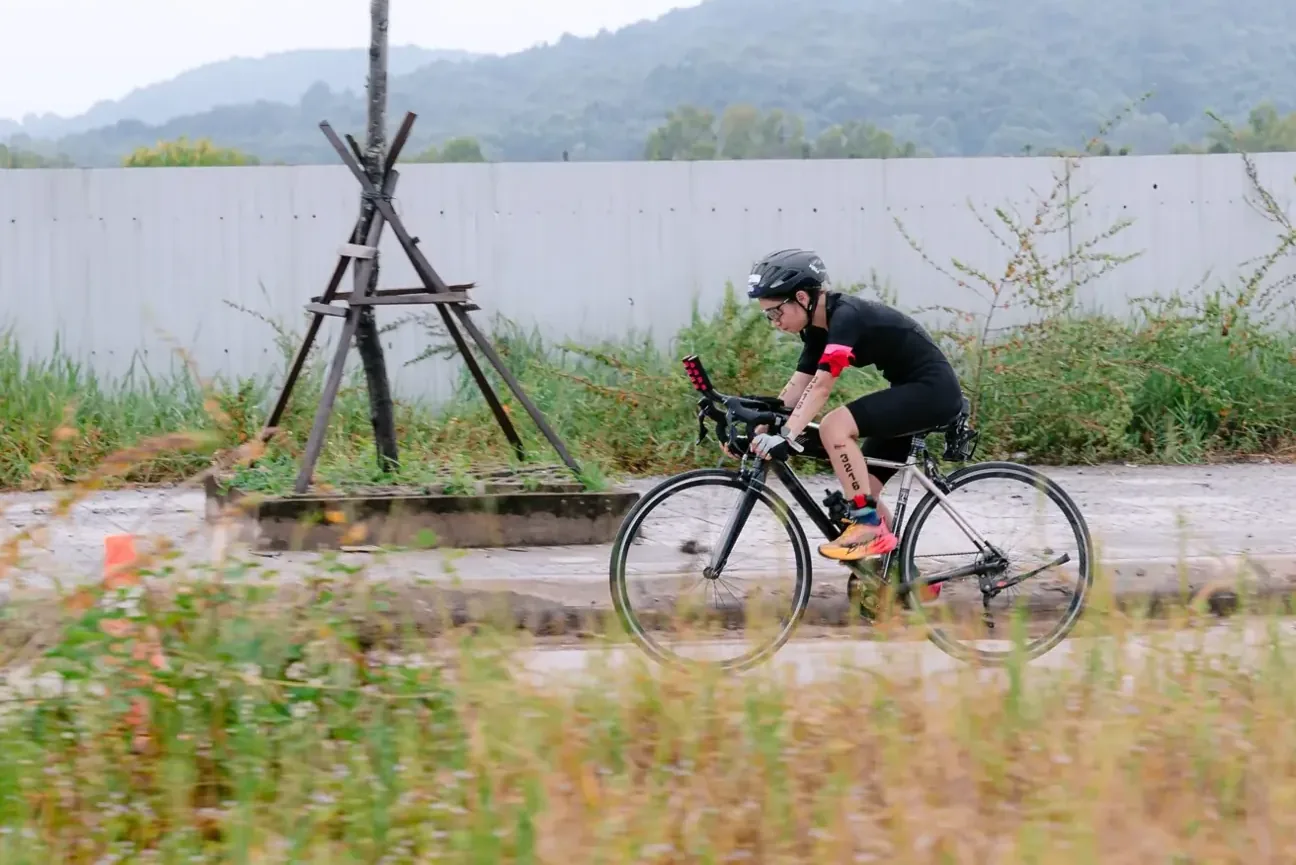
Hills are where triathlon bike splits are won and lost, but not in the way most people think. The athletes who lose the most time on a hilly course usually aren't the ones who climb slowly. They're the ones who climb too hard, empty the tank, and then crawl over the top, struggle on the flats and walk half the run.
This guide covers the three skills that matter on a hilly course: pacing, gearing and body position. None of them requires more fitness. They just require doing the right thing at the right moment.
The biggest mistake: climbing too hard
GTN presenter Mark Threlfall, filming on the hilly course of IRONMAN 70.3 Mallorca, describes three ways age-groupers overcook climbs:
- Keeping the same cadence and gear from the flat. As the road tilts up, holding the same leg speed means your power jumps far above what you planned.
- Trusting heart rate too early. You glance at your watch, see you're still in zone 3 and feel fine. But heart rate lags behind effort. A few minutes later it has climbed into your top zones, and the damage is done.
- Sprinting up, then freewheeling over the top. You surge, recover by soft-pedaling over the crest, and get passed by riders who climbed steadily and kept pedaling.
The result is the same in every case: you burn matches you'll need later, and you pay for it, often in the final third of the climb and almost always on the run.
How to pace a climb
Start thinking about the hill before you reach it. As you approach, hold back slightly instead of charging at it. A slightly higher cadence just before the climb helps reduce muscle fatigue, and you should avoid sudden accelerations into the base.
Set a ceiling, not a target. Power naturally rises on a climb because you're pushing directly against gravity with little momentum to carry you, so it's easy to push harder than you mean to. That's fine, within limits. GTN's guidance is to cap your effort at roughly 5–10% above your planned flat-road power while climbing.
No power meter? Use feel. Try to keep the same sense of pressure through your feet that you had on the flat. If you're using heart rate, aim to hold the same zone as on the flat and avoid sudden spikes, remembering that the number will rise after the effort, not during it.
Let people go. Riders will surge past you on the climb. On a long course, you will very likely see many of them again.
Pedal over the top. This is where cycling coach Matt Bottrill says most time is lost. As soon as you crest, get back into your aero position and pedal smoothly back up to your normal effort. Don't take a "breather" on the descent unless you genuinely need it.
Gearing: shift early, not in a panic
GTN's video on shifting puts it simply: look ahead and change gear before the hill, not halfway up it.
- Shift to an easier gear one step at a time, early. If you have two chainrings, you can switch to the small ring as you approach while easing off the pressure, then move to bigger cogs as the gradient increases.
- Ease off for a split second as you shift. Shifting under full load causes a "clunk," stresses the drivetrain and can drop the chain. Keep pedaling, but lighten the pressure for a moment, let the chain settle, then push again. You'll lose far less time than you would if you had to stop and refit a dropped chain.
- Avoid cross-chaining. Big chainring with the biggest cog, or small chainring with the smallest cog, bends the chain at a sharp angle and wears parts faster.
- Pick a cadence you can sustain. Most riders settle between about 80 and 95 rpm. Global Cycling Network presenters like 85–95 on climbs, but stress that the right number is the one you can hold without burning energy too fast.
Check your gearing before race day. Look at the course elevation profile. If it has steep or frequent climbs, a cassette with a larger biggest cog (for example, 32 teeth instead of 30) or a smaller chainring can make a big difference. One GCN presenter puts it bluntly: if climbing feels like a heavy gym session rather than pedaling, you're over-geared.
Position: aero or sit up?
On a triathlon (TT) bike, the steep seat angle and low front end put more of your weight forward, and the bike is often heavier than a road bike. So when should you stay on the aerobars?
- Short or gentle climbs: stay aero as long as you can and use your momentum.
- Longer or steeper climbs: there's a crossover point. GTN suggests that once your speed drops below roughly 32 km/h (20 mph), the aerodynamic benefit is small enough that sitting up on the base bar to produce power more comfortably makes sense.
- Seated vs. standing: staying seated costs less energy and keeps your heart rate lower. Standing lets you use your body weight for more power but is more expensive. Save it for the steepest sections or to give your backside a short break.
On a road bike on long, steady climbs, GCN recommends sliding slightly back on the saddle, engaging your core and keeping your hands and shoulders relaxed so the big muscle groups can do the work. Keep your upper body still. Swaying side to side wastes energy.
Steep pitches: practical tips
GCN's advice for genuinely steep roads:
- If your back wheel slips on gravel or wet pavement, shift your weight slightly back on the saddle.
- If your front wheel lifts, you're probably pulling up on the bars too hard. Pull toward your body instead of upward.
- Look ahead and pick your line. Avoid loose gravel, potholes and wet patches so you don't have to unclip.
- If you do stop, turn the bike slightly across the road to reduce the gradient, clip in your dominant foot, push off with one strong pedal stroke, and keep the pedals turning before you clip in the second foot.
Always follow the race rules and stay on your side of the road when doing this.
Two race-day habits that save your legs
These come from Trievery's founder, learned the hard way on real race courses.
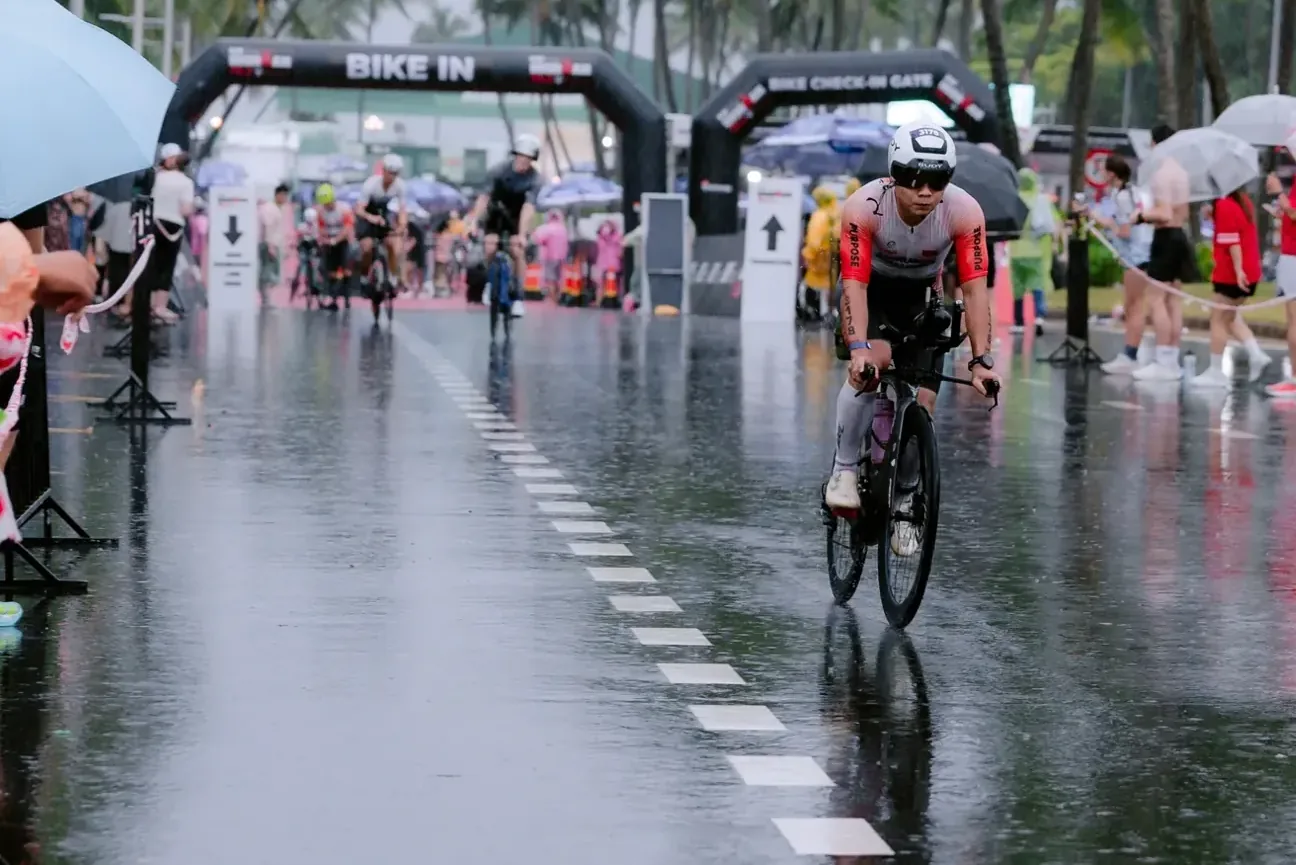
Rack your bike in an easy gear. When you leave your bike at bike check (the transition area where bikes are inspected and racked, often the day before), shift it into a low, easy gear first. Coming out of the swim, your heart rate is high and your legs aren't ready. Starting in a heavy gear makes the first pedal strokes a grind, and many races start the bike leg with a climb right out of transition. Pushing hard in those first kilometers overloads your legs early, and you pay for it later on the bike and on the run, which makes a good result much harder to reach. Start easy, let your legs wake up, then shift up and settle into your race effort.
Ease off over rough road. When you hit bumps, potholes or a rough section, don't stomp on the pedals straight away. Pedal lightly for a moment so the chain settles back onto the gears, then build your speed again. Hammering through rough patches is a common way to drop a chain, and stopping to put it back on costs far more time than a few seconds of easy pedaling.
Fueling on hilly courses
It's hard to drink or open a bar on a 10% gradient. Plan to eat and drink on flatter sections and on the early parts of climbs, before the effort peaks. Don't skip fueling just because the course is technical. A well-fueled athlete paces better, too.
How to practice
- Ride your local hills at race effort, focusing on a smooth transition from the flat into the climb and back to aero over the top.
- Practice shifting on quiet roads with gentle gradients until it's automatic.
- If you race on a TT bike, train on it in the hills, including moving between aero, base bar and standing.
- Learn the course. Look at the elevation profile, and if you can, drive or ride it before race day so the climbs aren't a surprise.
The bottom line
On a hilly triathlon, the fastest strategy is the even one. Hold back as you approach, cap your effort at around 5–10% above your flat-road target, shift early and smoothly, sit up when the speed drops, and pedal over the top. You may lose a few seconds to the people who sprint the climbs, but you'll often win back minutes from them on the run.
Sources
- Global Triathlon Network: How to ride a hilly triathlon (IRONMAN 70.3 Mallorca)
- Global Triathlon Network: How to climb faster on a triathlon bike
- Global Triathlon Network: How and when to change gear on a bike
- Global Cycling Network: How to ride steep climbs on a road bike
- Global Cycling Network: Transform your climbing and learn to love the hills